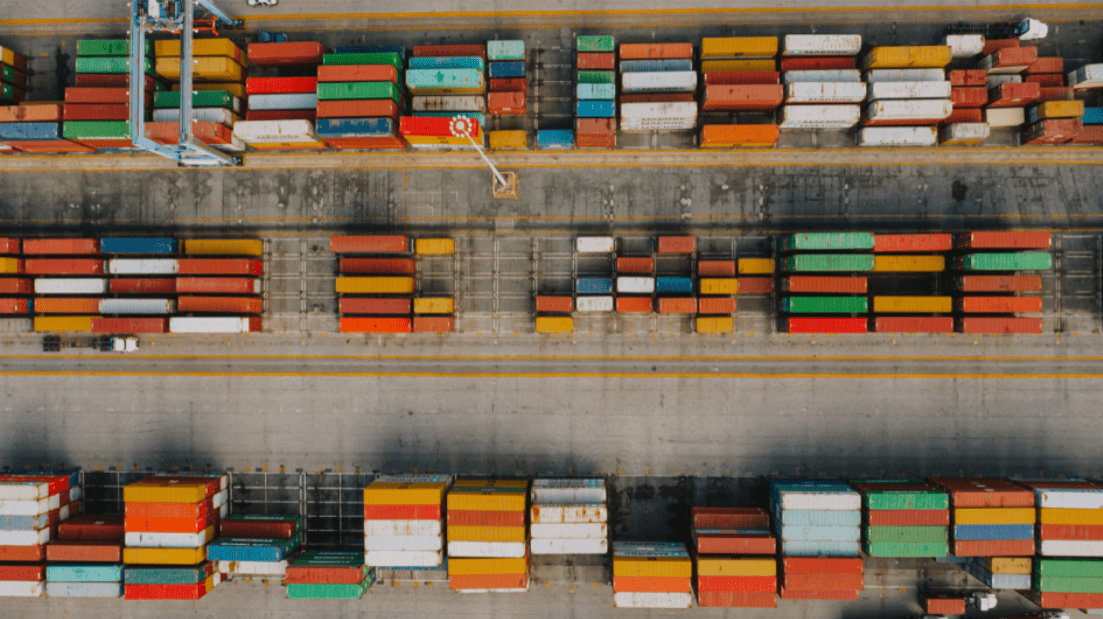



Orchestrated Supply Chains Run on Clean Data
Just-in-time had its era. What comes next demands something more: shared, accurate, real-time information flowing across every link in the chain
For decades, just-in-time manufacturing was the gold standard. Keep inventory lean. Eliminate waste. Trust your suppliers to deliver exactly what you need, exactly when you need it. It was an elegant model, optimized for a world that was predictable, globalized, and largely uneventful.
Then reality intervened.
A pandemic, a container ship wedged sideways in the Suez Canal, a semiconductor shortage that shuttered automotive plants worldwide – the fragility of JIT supply chains became impossible to ignore. Companies discovered, painfully, that efficiency without resilience is simply risk waiting to materialize.
The problem was never logistics. It was information.
When disruption hit, the companies that recovered fastest weren’t necessarily the ones with the biggest warehouses or the most suppliers on speed dial. They were the ones who could see clearly, who had visibility into where their materials were, their quality status, and the alternatives available. The core failure of JIT wasn’t lean inventory. It was opaque data.
Most supply chains still operate with a staggering amount of information locked in silos: PDFs emailed between departments, spreadsheets maintained locally, certifications stored on someone’s desktop. Critical quality data — the kind that determines whether a component is fit for purpose — often can’t travel reliably from a tier-two supplier to an OEM, let alone be accessed in real time during a sourcing crisis. Add in the difficulty of accounting for sub-tier supplier information, and you have a challenge that can only be solved by shining a bright light into the darkness.
The next competitive advantage in manufacturing isn’t speed or cost — it’s trusted, shareable, machine-readable supply chain data.
Orchestration, not just optimization
The shift I see happening across the industry is a move from supply chain optimization to supply chain orchestration. Optimization is about squeezing efficiency from a fixed structure. Orchestration is about making the entire system responsive, enabling every node in the network to act on the same accurate, real-time information. From design, to raw material, to manufacturing, to processing, to distribution and finally to the end customer.
This is where digital tools are fundamentally changing the game. At SmartCert, we’re focused on one critical piece of that puzzle: making material certifications and quality documentation fully digital, instantly shareable, and verifiable. When a manufacturer can access a supplier’s mill cert in seconds — not days — and when that data is structured so AI can actually read and act on it, the ripple effects are significant. Procurement decisions sharpen. Quality checks accelerate. Audit trails become automatic.
But SmartCert is one part of a much larger transformation. AI-driven demand forecasting, digital twins, verified provenance, real-time logistics platforms, together, these tools are building the infrastructure for a supply chain that doesn’t just react to disruption but anticipates and absorbs it.
The mandate to share, but securely
There is also a cultural shift underway that is as important as any technology. Supply chain partners are increasingly required by customers, by regulators, and by competitive pressure to share critical information across organizational boundaries. Conflict minerals disclosure. Carbon footprint reporting. Country-of-origin traceability. Cybersecurity posture assessments. The demands for supply chain transparency are accelerating, and companies that treat data sharing as a liability rather than a capability will find themselves locked out of the most demanding and most valuable customer relationships.
The organizations that will lead in this environment are those building supply chains designed for information flow, not just material flow. That means standardizing data formats, investing in interoperability, and creating systems where trust and verification are baked in rather than bolted on.
Clean data is not a back-office function. It is the operating system of the modern supply chain.
The path forward
None of this means abandoning the lean principles that made JIT powerful. Waste is still waste. Efficiency still matters. But the definition of efficiency must expand. A supply chain that is lean in inventory but blind in data is not efficient, it is exposed.
The orchestrated supply chain of the next decade will be leaner in friction, not just in stock. It will move faster because information moves first. It will be more resilient because every partner in the network will have access to the same ground truth. And it will be more competitive because the companies building it today are solving problems their peers haven’t even named yet. Finally, it will be more secure as industries flow cybersecurity requirements to suppliers based on NIST 800 guidelines.
We are at an inflection point. The tools exist. The urgency is real. The question now is which organizations will treat clean, connected data as the strategic asset it is and build accordingly.
Blog
How much is lost paperwork costing your company
Read more →
Webinar
SmartTalk with quality and fastener expert Carmen Vertullo
Read more →
Case Study
PENCOM gained 80 percent efficiency on internal cert processes with SmartCert
Read more →
Transforming Traceability with SmartCert
Download PDF →
Click here to schedule a demo and explore how SmartCert can reduce your risk and strengthen visibility into your supply chain.
You might also like
EO 14415: What Defense Suppliers Have to Prove,
and How to Get Ready

CMMC Phase II Is Suspended. Your Obligations Aren’t